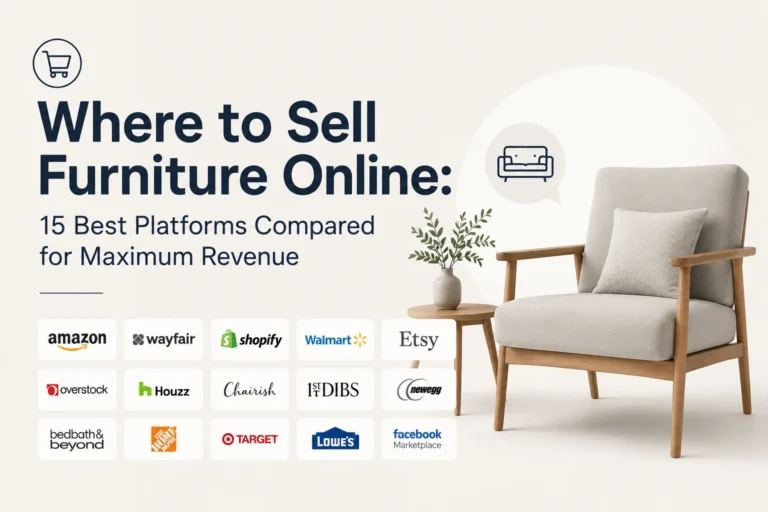

Choosing where to sell furniture online is one of the most important decisions a furniture brand can make. The wrong platform can reduce profit margins through high fees, limit visibility, slow growth, and attract customers who aren’t the right fit for your products.
The opportunity is huge. The online furniture and home décor market generates hundreds of billions of dollars in sales each year. However, success isn’t just about listing products on the largest marketplace. Choosing the right platform can have a greater impact on revenue, conversions, and return rates than increasing your advertising budget.
At Orbe3D, we’ve delivered over 1,100 furniture visualization projects for brands selling through Amazon, Wayfair, Shopify, and other leading eCommerce channels. Through these projects, we’ve seen how platform selection and product presentation directly impact conversions, revenue, and long-term growth and which platforms are best suited for different types of furniture businesses.
In this guide, you willl discover:
- A detailed comparison table of the best websites to sell furniture online.
- 15 leading furniture-selling platforms: how to start selling and pros and cons.
- A practical framework for choosing the right platform and the visual-content factor most sellers overlook.
Quick Comparison: Best Platforms to Sell Furniture Online at a Glance
| Website | Audience Count | Account Opening Cost | Competition Level | Time to Start Selling (after account open) |
| Amazon Home | 310M+ active global customers | $0 (Individual, $0.99/item) or $39.99/mo (Professional) | Very High – ~1.65–2.5M active sellers | Same day–2 weeks (furniture is often a gated category requiring approval) |
| Etsy | ~86.5M active buyers | $15–$29 one-time shop setup fee | High – ~5.6–8.7M active sellers | Same day–48 hrs |
| Wayfair | ~21–22M active customers | $0 (wholesale pricing model, no fees) | Medium – curated, ~11,000+ suppliers | 2–4 weeks (compliance + catalog review) |
| Walmart Marketplace | ~120M+ unique active monthly shoppers | $0 to apply; 15% referral fee on furniture | Medium – ~200K active sellers | 1–4 weeks approval, then 2–3 days to go live |
| eBay | ~134–136M active buyers | $4.95/mo (Starter) up to $2,999.95/mo (Enterprise) | High – ~17–18M active sellers | Same day (no approval gate) |
| Target Plus | Not published (invite-only) | $0 to apply; 5–15% referral fee | Low – curated, invitation-only | Weeks to months (no fixed timeline) |
| Shopify | ~875M shoppers across all Shopify stores (not shared traffic) | $39–$399/mo (3-day free trial) | N/A – your own store, no shared-marketplace competitors | Same day (store live in hours; you supply the traffic) |
| 1stDibs | Niche luxury/vintage buyer base | $500/mo subscription | Low – vetted, requires 2 trade references | Weeks (manual vetting) |
| Urban Outfitters | Not published (curated retailer) | Invite-only; brokers often charge ~5% pitch fee | Low – highly selective | Months (application + buyer calls) |
| Bonanza | Smaller marketplace (self-reported ~50K sellers) | $0 (no subscription, ~3.5% commission on sale) | Low | Same day |
| Chairish | Design-forward/vintage furniture niche | $0 to apply; commission-based | Low–Medium | Days (faster vetting than 1stDibs) |
| Houzz Pro | Trade pros + homeowners researching renovation | Houzz Pro software from ~$65+/mo | Low – B2B/trade-focused, not mass retail | Days (software setup) |
| Faire | Wholesale retail buyers | $0 to join; commission on early orders | Medium – wholesale-focused | Days (fast onboarding, no lengthy approval) |
| TikTok Shop | ~11M+ active US Shop buyers | $0/mo; 6% referral fee | Medium–High – fast-growing, content-driven | Days (verification + approval) |
| Meta Commerce (Instagram/Facebook Shop) | Billions of Meta users globally (not all shop-enabled) | $0 to set up | Medium | Days (catalog setup + review) |
Detailed Breakdown of 15 Platforms Where to Sell Furniture Online
Amazon Home
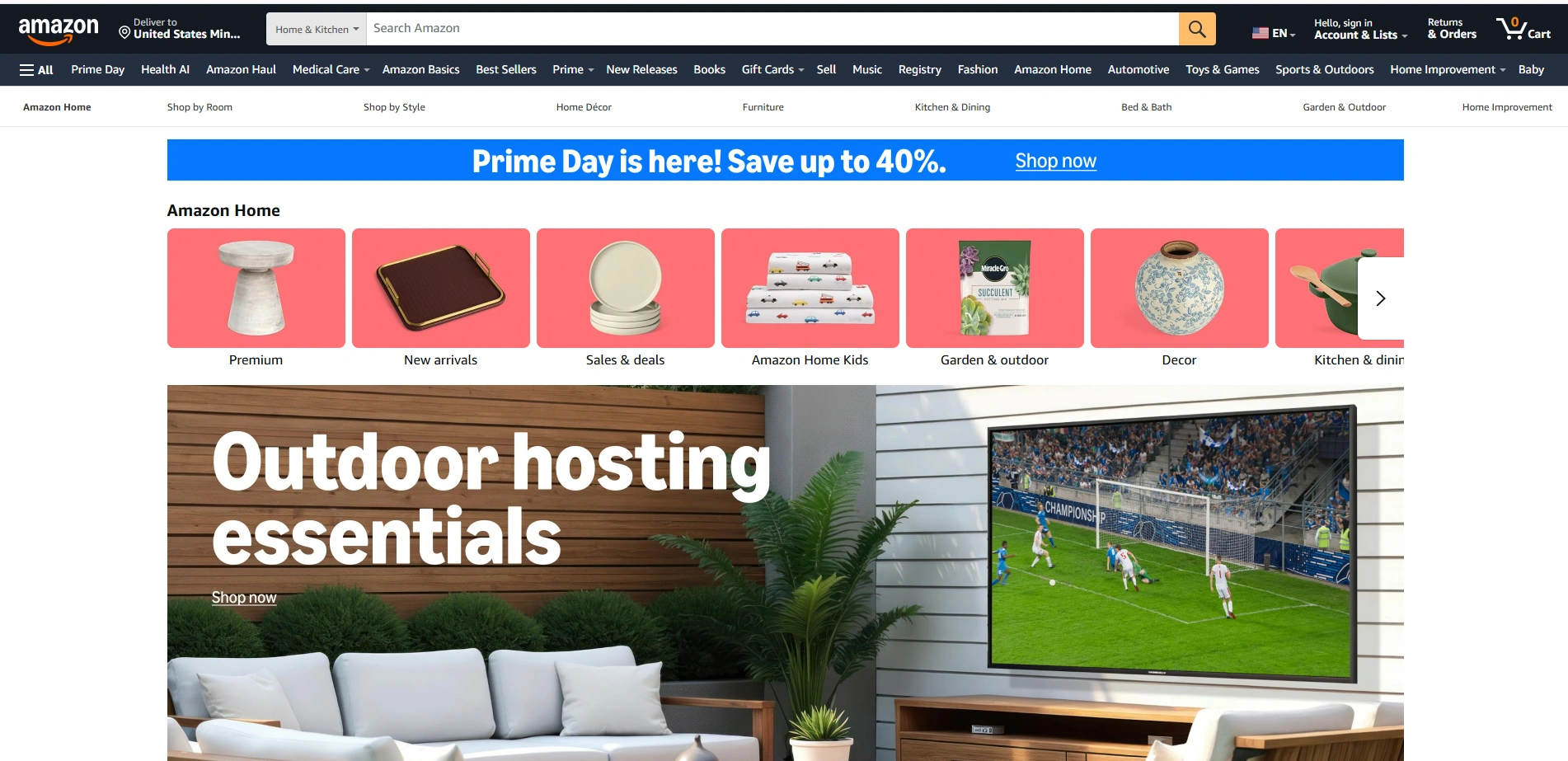
Website: https://www.amazon.com/
Pricing:
- Individual subscription: $0.99/item sold + additional selling fees
- Professional subscription: $39.99/month + additional selling fees
- Referral fee for furniture: 15% on the portion of the sale price up to $200, 10% on any portion above $200
Amazon Home is still the default answer to “where should I sell furniture online” simply on reach – Amazon serves over 310 million active customers globally, though the seller side has consolidated to roughly 1.65–2.5 million active sellers competing for that traffic. Both subscription tiers get you into the catalog and access to Amazon’s merchandising tools, and listings with strong ratings and reviews can earn extra placement across the site. Furniture is frequently a gated category, so new sellers should expect a category-approval step before they can list, on top of standard account setup.
| Pros | Cons |
| Largest active buyer base of any platform on this list | Gated category – furniture often needs separate approval |
| High-intent shoppers already searching with purchase intent | Referral fees plus FBA/advertising can exceed 50% of revenue for typical sellers |
| A+ Content and brand store tools support rich product media | Intense competition; fewer than 8,000 sellers capture roughly half of US third-party GMV |
| Strong logistics infrastructure via FBA | Amazon’s own private-label products can compete directly in some categories |
How to win on Amazon:
Furniture has one of the highest return rates in e-commerce, and Amazon’s own data shows detailed imagery and accurate sizing information directly reduce returns and negative reviews. Sellers who supplement standard photos with 360° spins, room-scale lifestyle renders, and AR-ready 3D models in A+ Content modules consistently see fewer “didn’t match the picture” returns and better Buy Box positioning – this is the single highest-leverage lever on a platform where you can’t compete on price alone against Chinese manufacturers.
2. Etsy
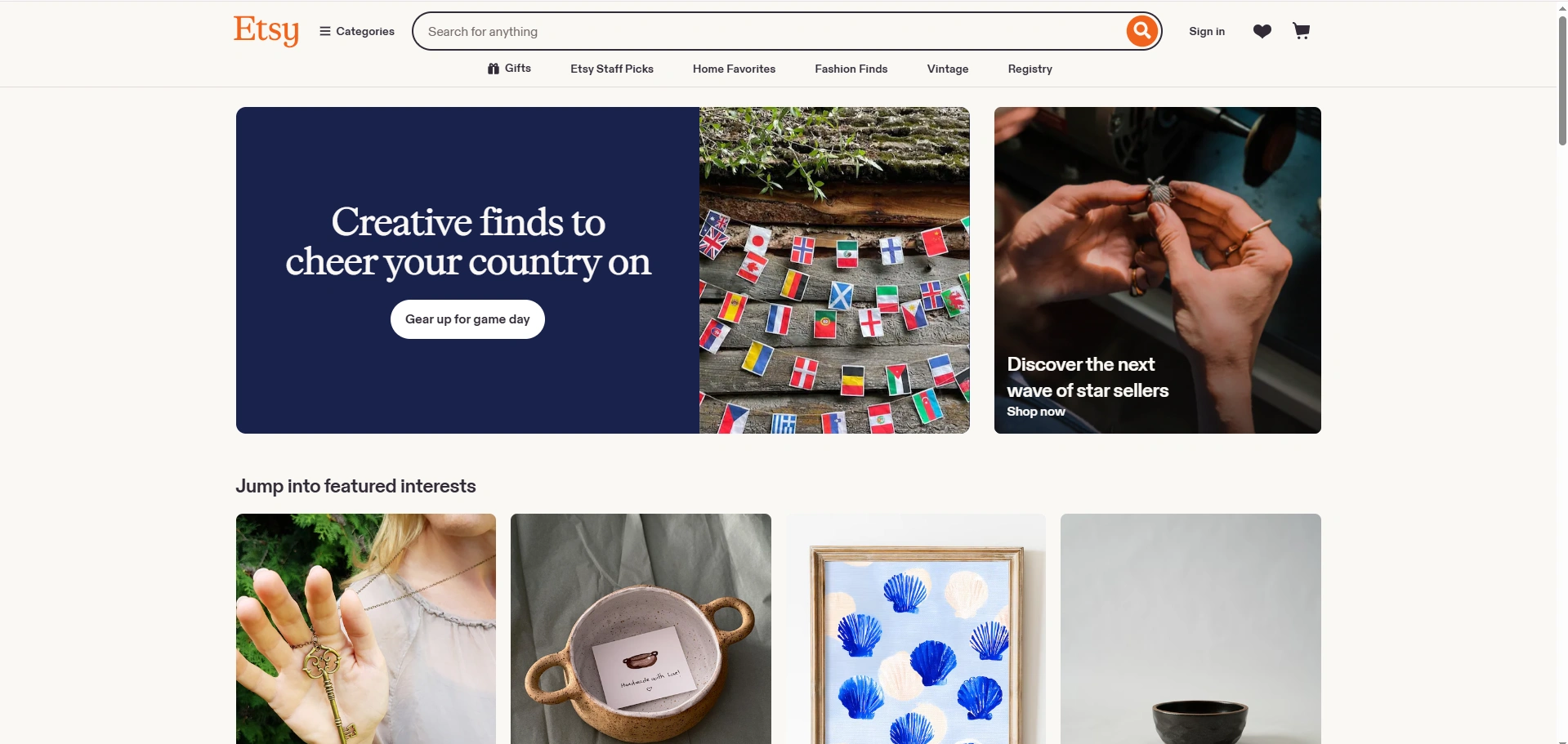
Website: https://www.etsy.com/
Pricing:
- Standard plan: $0/month
- Plus plan: $10/month
- Listing fee: $0.20 per item, renews every 4 months
- Transaction fee: roughly 6.5% of the sale price
- Payment processing: approximately 3% + $0.25 per order
- One-time new-shop verification fee: $29
Etsy remains the strongest fit for handmade, made-to-order, and vintage furniture rather than mass-manufactured pieces – its roughly 86.5 million active buyers come specifically looking for unique, non-big-box items, and homewares and furnishings are consistently one of Etsy’s top-performing categories. There’s no monthly fee on the Standard plan, which keeps the barrier to entry low, but the seller base (north of 5.5 million active sellers) means visibility inside search results depends heavily on listing quality and tagging.
| Pros | Cons |
| No monthly fee required to start (Standard plan) | High seller density – top 5% of shops capture 43% of all sales |
| Buyers actively seek unique/custom pieces, less price-war pressure | Algorithm rewards strong photography and SEO; weak listings get buried |
| Plus plan adds ad credits, listing credits, and a free custom storefront URL | Fees stack quickly: listing + transaction + processing + optional ad fees |
| Strong organic and Google Shopping visibility for niche search terms | Lacks integrated freight/white-glove shipping options, requiring manual carrier setup. |
How to win on Etsy:
Etsy buyers are shopping by feel and story, not spec sheet – custom and made-to-order items already represent roughly 30% of category sales. A 3D-rendered preview that lets a buyer see wood finish, fabric, or hardware options before committing to a custom order directly addresses Etsy’s biggest conversion blocker for furniture: the inability to “see” a bespoke piece before paying for it.
3. Wayfair
Website: https://www.wayfair.com
Pricing: $0/month – Wayfair operates on a wholesale-cost model rather than charging referral fees. You sell to Wayfair at your wholesale price; Wayfair sets and controls the retail price shown to shoppers.
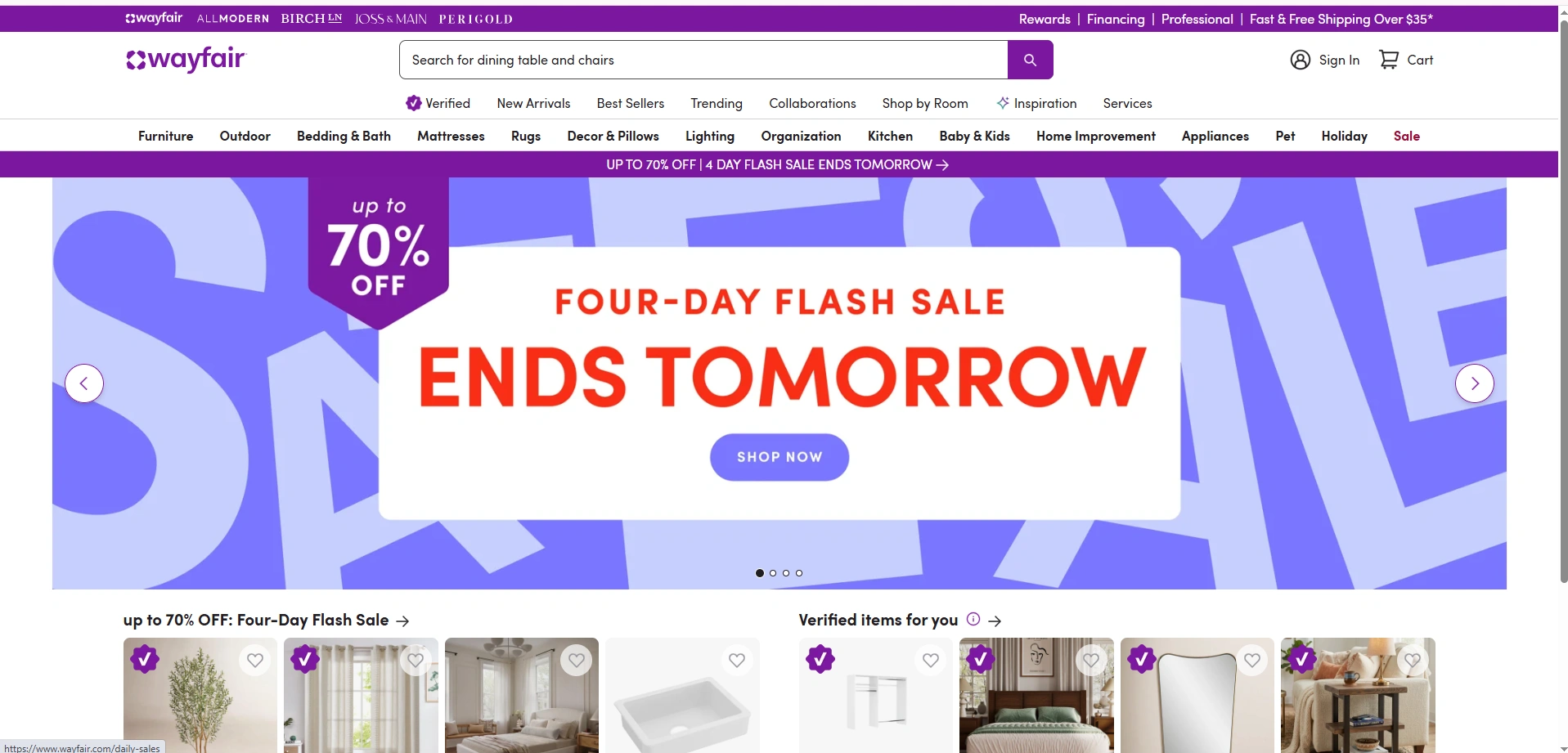
Wayfair is the most furniture-native marketplace on this list, with roughly 21–22 million active customers shopping specifically for home goods rather than browsing a general catalog. There are no listing or subscription fees – Wayfair’s margin comes from the spread between your wholesale price and the retail price it sets, which means you give up pricing and promotional control in exchange for zero platform fees and a curated, lower-competition catalog. New suppliers go through a compliance review of their listings before going live.
| Pros | Cons |
| Zero monthly fees or referral commissions | You don’t control final retail pricing |
| Curated, home-goods-only audience – no competing with unrelated categories | Listings must clear a compliance review before going live (can take weeks) |
| High purchase intent – shoppers arrive specifically for furniture/home | Strict performance standards on shipping speed and return rates |
| Wayfair Fulfillment Services (WFS) available, similar to Amazon FBA | Best suited to sellers comfortable with wholesale-style margins |
How to win on Wayfair:
Because Wayfair reviews listing quality as part of supplier compliance, sellers who submit polished lifestyle renders alongside standard product shots tend to clear review faster and earn better placement in Wayfair’s sponsored and editorial features – the platform actively favors suppliers whose imagery looks “at home” in its curated catalog rather than like a basic product photo.
4. Target Plus
Website: https://www.target.com/
Pricing: Invite-only – no published subscription fee. Sellers pay a 5–15% referral fee per category once approved.
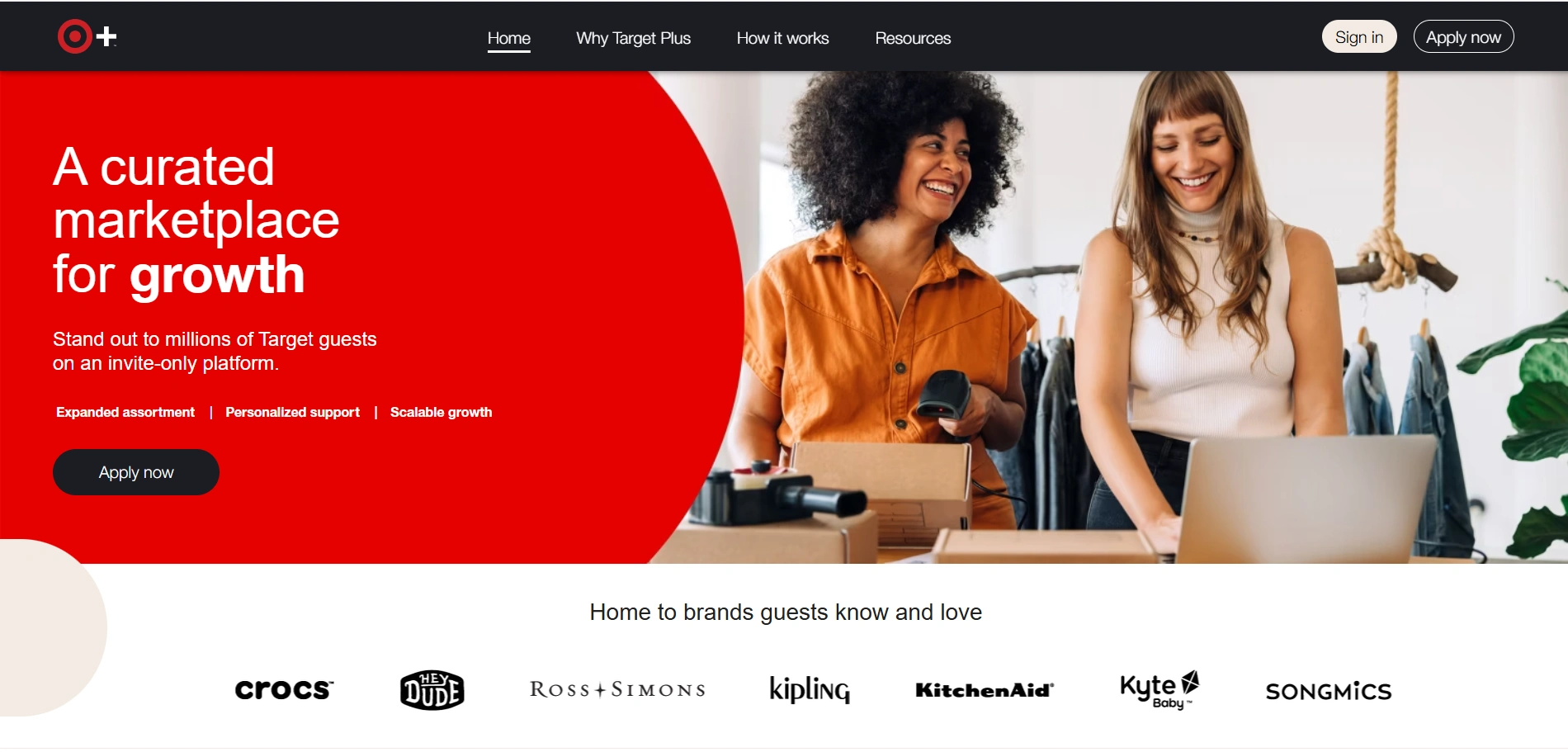
Target Plus is the most exclusive marketplace on this list: it’s invitation-only, meaning brands apply and wait to be selected rather than self-onboarding. Target explicitly markets this as a curation strategy – fewer, hand-picked sellers and “thoughtfully selected” products – in exchange for limited competition once you’re in and access to a loyal, brand-conscious customer base.
| Pros | Cons |
| Limited competition – Target deliberately caps how many sellers it approves | No public application timeline; approval is entirely Target’s discretion |
| Access to a loyal, higher-intent shopper base | Audience size and seller-facing data isn’t published |
| Strong brand-trust halo from being “Target-approved” | Lower referral fee ceiling (15%) than Amazon, but still meaningful |
| Advanced marketing and digital merchandising tools once approved | Best suited to established brands with strong existing track records |
How to win on Target Plus:
Since the application itself is the bottleneck, the deciding factor is usually brand presentation – professional, consistent product imagery across every SKU signals the operational maturity Target’s buying team is screening for. Brands that walk in with cohesive, high-quality 3D-rendered catalogs (rather than mismatched photography pulled from multiple sources) present as more “retail-ready” during review.
5. Shopify

Website: https://www.shopify.com/
Pricing (2026 plans):
- Starter: $5/month
- Basic: $39/month ($29/month billed annually)
- Grow: $105/month ($79/month billed annually) – formerly the “Shopify” plan
- Advanced: $399/month ($299/month billed annually)
- Shopify Plus: from $2,300/month (enterprise)
Shopify isn’t a marketplace at all – it’s the infrastructure for your own branded storefront, which is why it doesn’t compete on “audience” the way Amazon or Etsy do. Across all Shopify-powered stores combined, the platform serves roughly 875 million shoppers a year, but none of that traffic is pooled or shared; you bring your own customers via SEO, paid ads, or marketplace cross-promotion. In exchange, you keep full control over branding, pricing, and the customer relationship – something none of the marketplaces on this list offer.
| Pros | Cons |
| Full control over branding, pricing, and customer data | No built-in audience – you must drive your own traffic |
| No shared-marketplace competitors undercutting your listings | Monthly subscription plus payment processing fees regardless of sales |
| AR/3D product viewers and customizable checkout (Plus tier) | Higher upfront effort: design, SEO, and marketing all fall on you |
| Scales from solo seller to enterprise on one platform | Conversion rates (1.4–1.8% average) are lower than marketplace traffic |
How to win on Shopify:
Because you’re competing for your own traffic rather than marketplace search rank, product page conversion is everything. Shopify Plus merchants now have native support for AR and 3D media directly on product pages – furniture brands that let shoppers place a 3D model of a sofa in their own room before buying see meaningfully lower bounce rates and fewer “wrong size” returns than brands relying on static photography alone.
6. 1stDibs
Website: https://www.1stdibs.com/
Pricing: High transaction commission (15%) + 3% processing fee on top of the monthly subscription
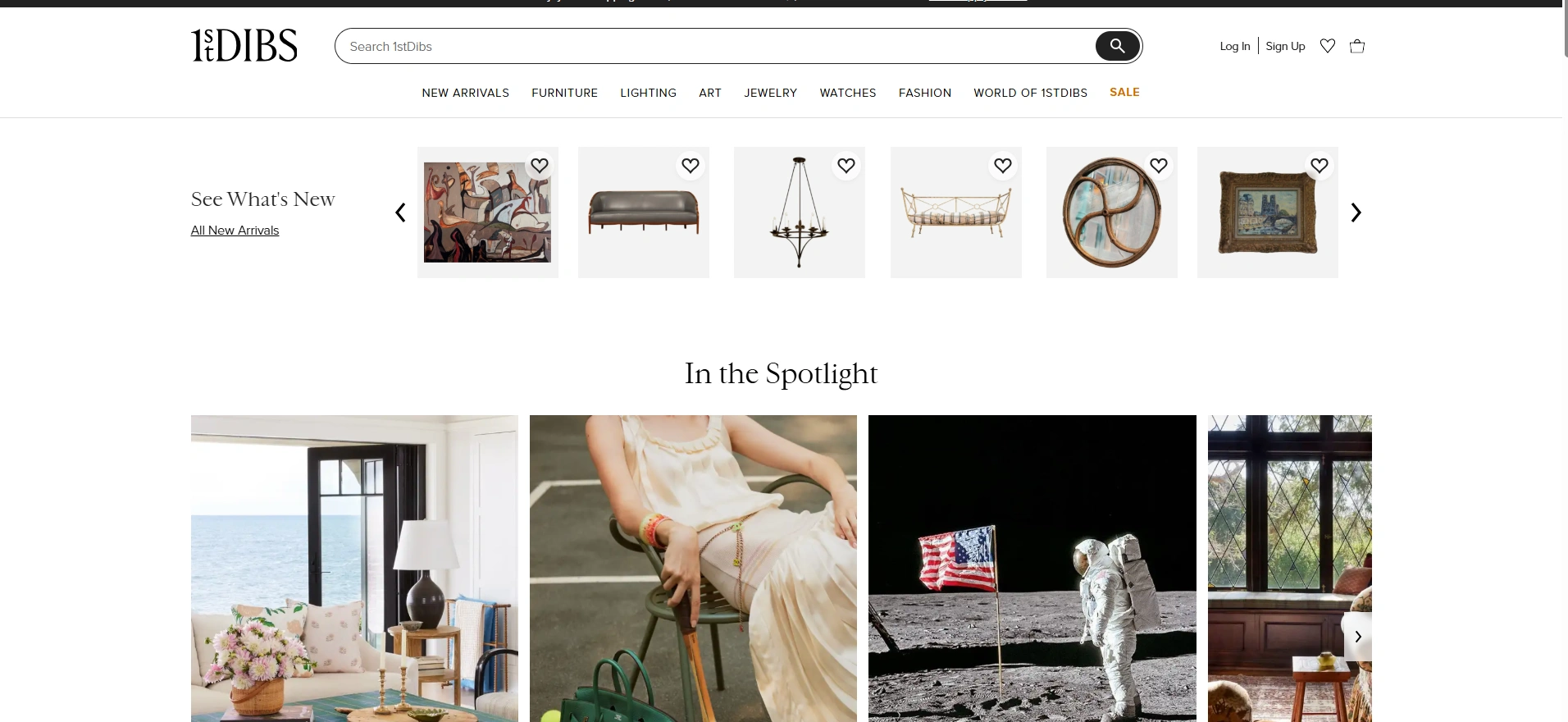
1stDibs is the destination for sellers specifically targeting the luxury, antique, and high-end design furniture market. It’s the most selective platform on this list outside of Target Plus and Urban Outfitters – sellers must submit an application along with at least two trade references who can vouch for the quality of their goods, and 1stDibs’ in-house team can reject or approve a brand at any stage of the process.
| Pros | Cons |
| Buyer base is specifically shopping luxury/high-end design | Highest subscription cost on this list at $500/month |
| Curated environment elevates brand perception by association | Requires at least two trade references to apply |
| Less price-competition than mass marketplaces | In-house vetting team can decline applicants at any stage |
| Strong fit for one-of-a-kind, antique, or designer pieces | Not suited to mass-produced or budget furniture |
How to win on 1stDibs: At this price point, buyers expect editorial-quality presentation, not marketplace snapshots. Sellers who pair professional photography with detailed 3D renders showing construction details, joinery, and material texture meet the platform’s implicit bar for “museum-quality” presentation that luxury buyers expect before committing to a four- or five-figure purchase.
7. eBay
Website: https://www.ebay.com/
Pricing (store subscriptions, annual commitment):
- Starter: $4.95/month
- Basic: $21.95/month
- Premium: $59.95/month
- Anchor: $299.95/month
- Enterprise: $2,999.95/month
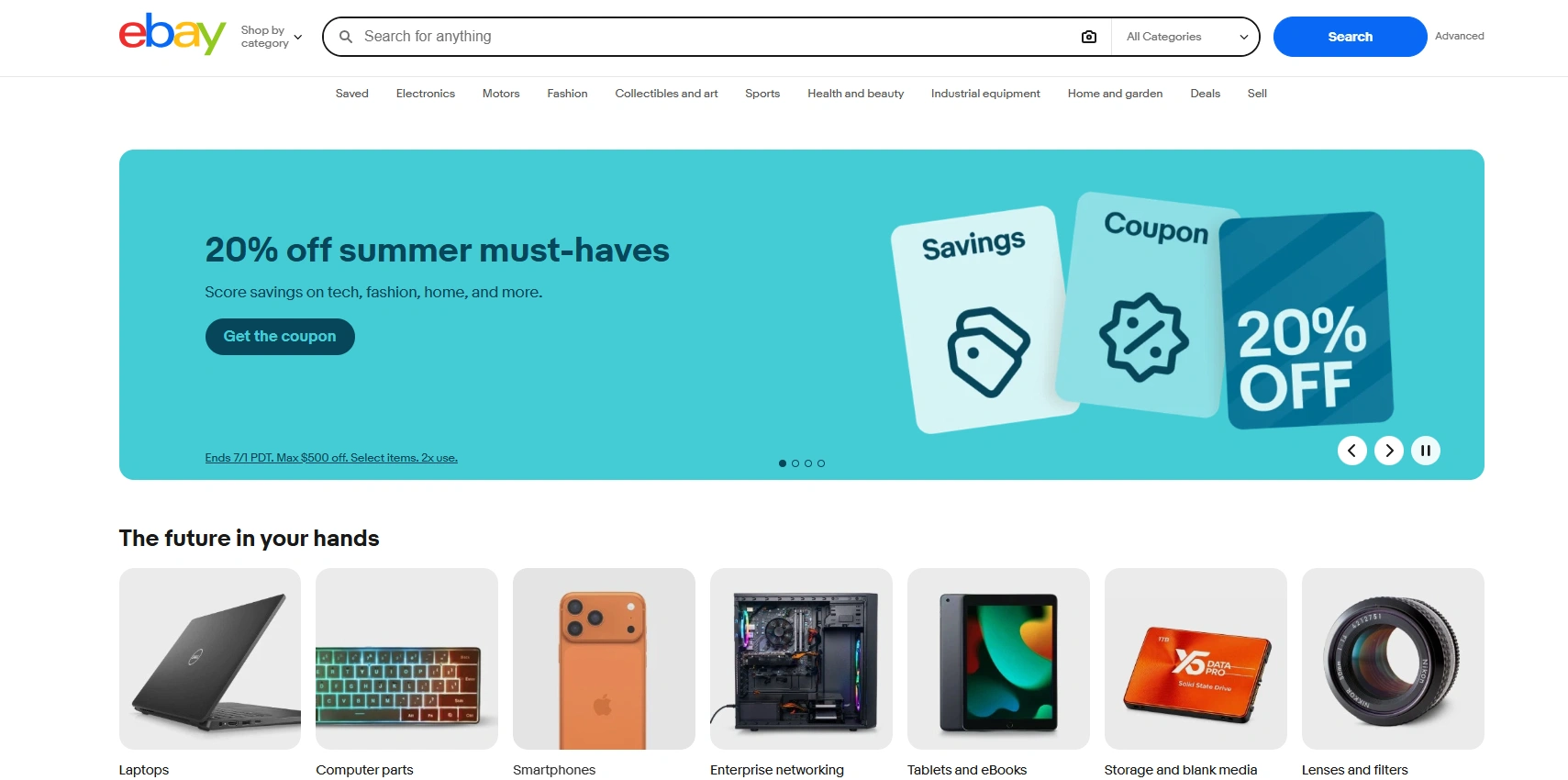
eBay connects sellers to roughly 134–136 million active buyers worldwide, making it one of the largest buyer pools on this list, second only to Amazon. Unlike Amazon, eBay lets sellers operate without a paid store subscription at all (paying per-listing and final-value fees instead), though a subscription unlocks lower fees and a customized storefront. All paid tiers come with a required annual commitment, so the choice of plan should match expected sales volume rather than testing the waters month to month.
| Pros | Cons |
| Massive, established buyer base (134M+ active buyers) | Store subscriptions require an annual commitment |
| Flexible entry – can sell without any store subscription | Final-value and per-listing fees apply regardless of plan |
| Strong fit for vintage, refurbished, and one-off furniture pieces | Buyer base has declined from its 2018 peak of 179M |
| Generative AI listing tools speed up catalog creation | Lacks native white-glove fulfillment, but integrates with third-party networks like uShip for freight handlin |
How to win on eBay: Furniture listings on eBay live or die on buyer trust, since the platform spans everything from brand-new to heavily used pieces. Multiple angle photography plus a short 3D walkaround reduces the single biggest objection eBay furniture buyers raise – “I can’t tell the actual condition or scale from these photos” – and tends to reduce post-sale disputes and returns.
8. Walmart Marketplace

Website: https://marketplace.walmart.com/
Pricing: 15% referral fee on the portion of the sale price up to $200, and 10% on any portion above $200 for furniture and home goods.
Walmart Marketplace has crossed roughly 200,000 active third-party sellers and pulls in an estimated 400–500 million monthly site visits, making it the clear “second pillar” alongside Amazon for US multichannel sellers. Unlike Amazon, there’s no monthly subscription fee – Walmart only charges once you make a sale – but the application process is stricter, typically taking one to four weeks for approval, and Walmart actively favors applicants with a proven track record on other marketplaces.
| Pros | Cons |
| No monthly subscription fee – pay only on actual sales | Approval can take 1–4 weeks, sometimes longer |
| Lower seller density than Amazon (~200K vs. 1.65M+ active sellers) | Requires US business registration, tax ID, and US warehouse address |
| New-seller incentive program offers fee discounts and ad credits | Can’t use Amazon-branded packaging – account suspension risk |
| Walmart Fulfillment Services (WFS) mirrors Amazon FBA | Strict performance metrics evaluated every 90 days |
How to win on Walmart: Walmart’s Listing Quality Score directly factors into search placement, and listing quality is explicitly tied to content completeness and imagery – sellers using rich, model-accurate 3D product renders alongside lifestyle shots tend to score higher and convert at the 1.7x rate Walmart attributes to its top “Pro Seller” tier.
9. Urban Outfitters
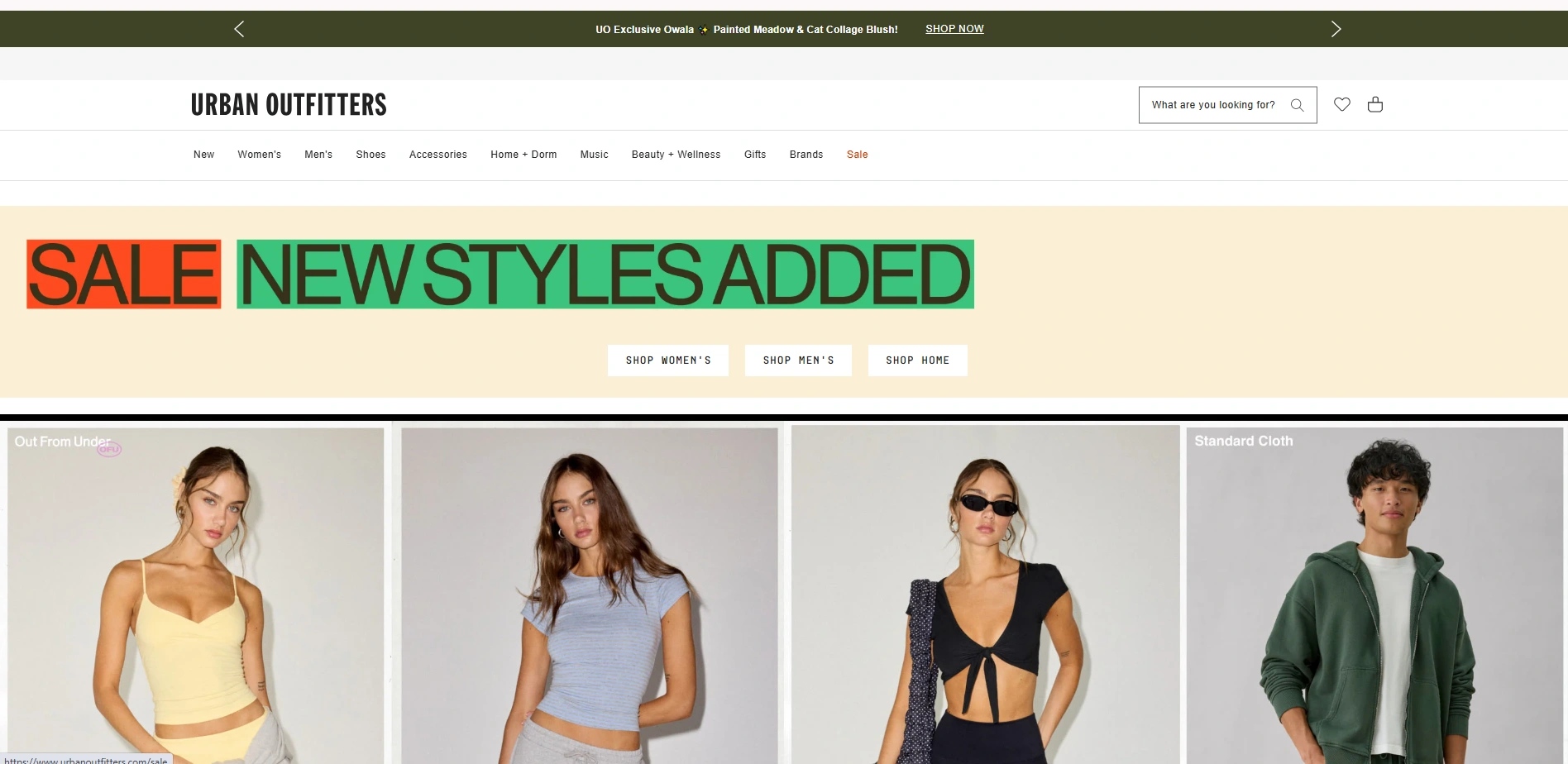
Website: https://www.urbanoutfitters.com/
Pricing: Invite-only – no published subscription fee. Some brands work through brokers who pitch on their behalf for a fee of around 5% of sales.
Urban Outfitters is a curated lifestyle retailer with 245+ physical locations across the US, Canada, and Europe, and its online marketplace mirrors that same selectivity. Getting listed typically requires not just a written application but a direct pitch call with UO buyers, and the process can take months. It’s a strong brand-halo fit for furniture brands targeting a younger, design-conscious demographic, but it’s the slowest and least predictable path to market on this list.
| Pros | Cons |
| Strong brand halo with a design-conscious, younger demographic | Lengthy, unpredictable approval process – often months |
| Curated catalog means less head-to-head price competition | No published audience size or seller-facing data |
| Multi-region presence (US, Canada, Europe) | Brokers/reps may charge a pitch fee for representation |
| Good fit for design-forward, lifestyle-positioned furniture | Best suited to brands with an established aesthetic identity already |
How to win on Urban Outfitters: Because the pitch call is the real gatekeeper, having a polished lookbook-style visual presentation – lifestyle renders that show how a piece fits into UO’s aesthetic world rather than a bare product shot – gives buyers a faster, lower-risk way to picture the product in UO’s merchandising context before approving it.
10. Bonanza
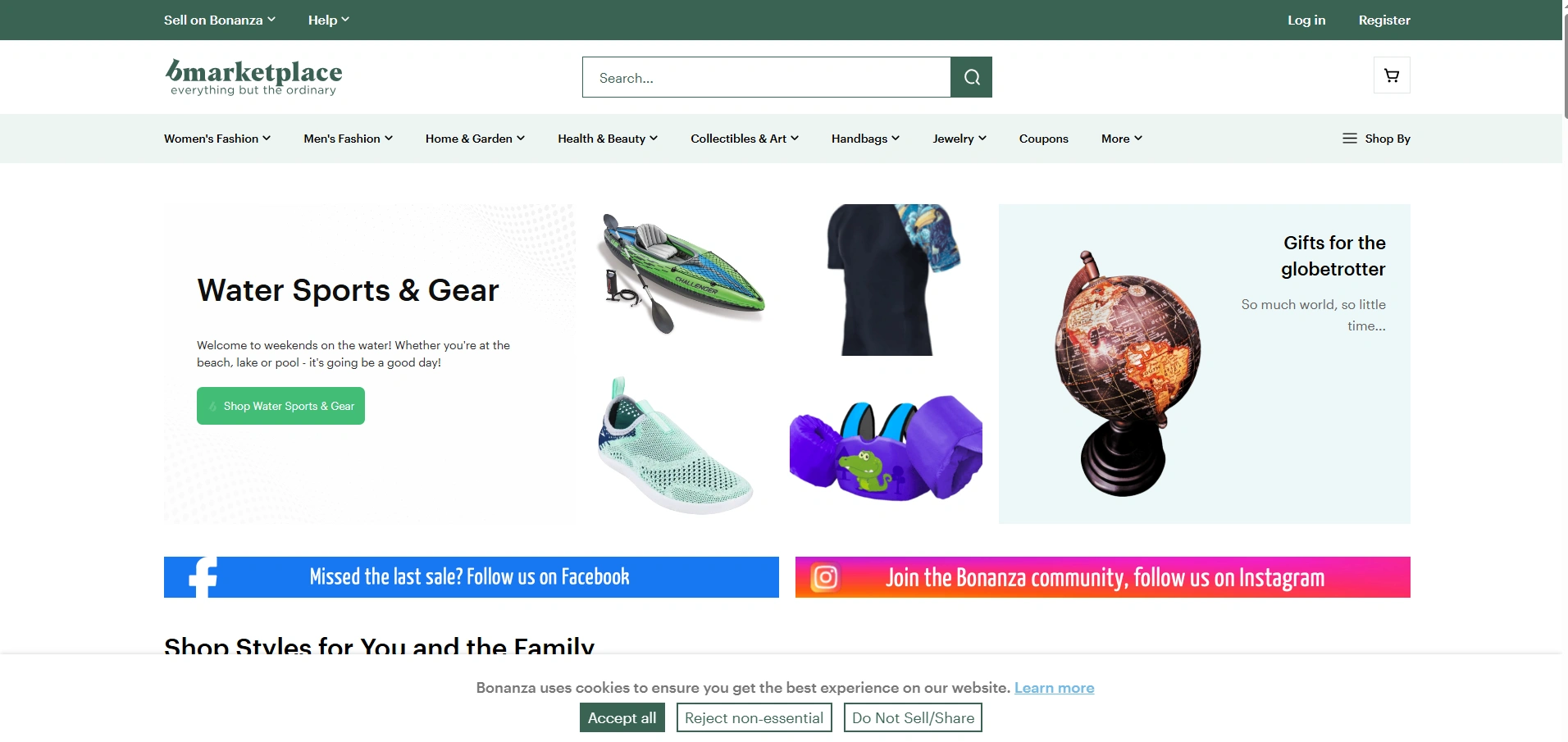
Website: https://www.bonanza.com/
Pricing: 3.5% on the first $500 of the final offer value, plus 1.5% on any amount above $500. Advertising traffic options increase this rate from 9% to 30%.
Bonanza positions itself as a lower-fee alternative to the major marketplaces, with sellers reporting it was voted “Best Overall Marketplace” by 50,000 sellers over eBay, Etsy, and Amazon in independent polling. There are no contracts, listing fees, or setup costs, and the commission structure is one of the lowest on this list – though its buyer base is correspondingly smaller than the major players.
| Pros | Cons |
| No subscription, listing fees, or setup costs | Smaller buyer base than Amazon, eBay, or Etsy |
| Among the lowest commission rates on this list (~3.5%) | Less brand recognition among shoppers |
| No contracts – completely free to list and delist | Final Offer Value varies by product/shipping, requiring research |
| Good low-risk testing ground for new sellers | Limited built-in marketing tools compared to larger platforms |
How to win on Bonanza: With a smaller built-in audience, Bonanza listings rely more heavily on external traffic and search visibility than on marketplace browsing – sellers who invest in differentiated, high-quality 3D product imagery stand out more easily in a smaller, less crowded catalog than they would competing against millions of Amazon listings for the same attention.
11. Chairish
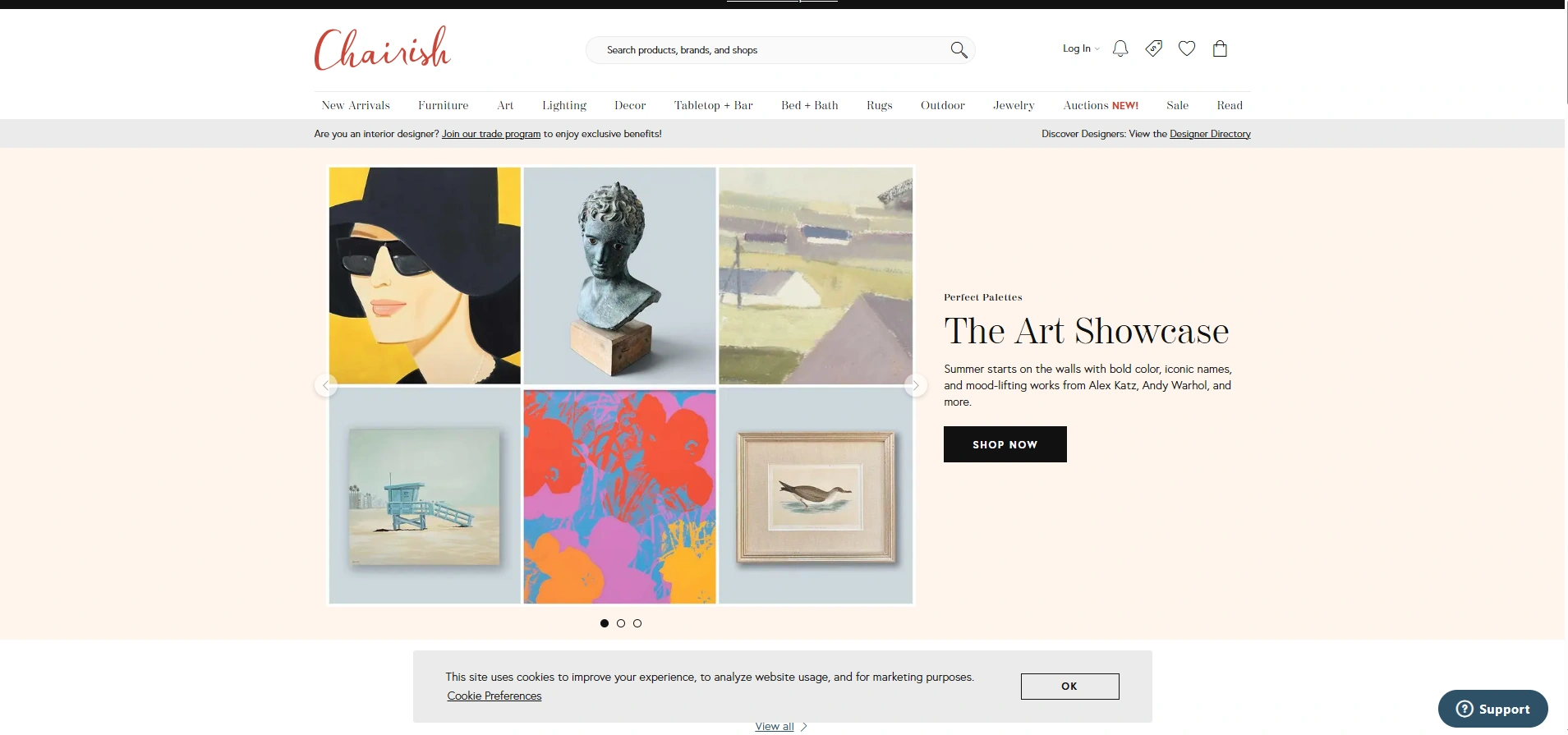
Website: https://www.chairish.com/
Pricing: Free to list. Commission is tiered by seller plan:
- Flat 20% commission on most sales,
- plus a 3% credit card processing fee.
- Optional paid subscription tiers unlock premium marketing features
Chairish is the design-world counterpart to 1stDibs – curated specifically for vintage, antique, and high-quality contemporary furniture, with a buyer base skewed toward interior designers and design-conscious consumers. Listing is free, and Chairish handles payment processing, professional photo touch-ups, and shipping logistics, but the trade-off is the highest commission structure on this list for newer sellers.
| Pros | Cons |
| Free to list, with no upfront cost | Highest commission rate for new sellers (40% on Consignor plan) |
| Chairish handles payment processing and shipping logistics | Strict curation – mass-produced, big-box items are typically declined |
| Buyer base specifically seeks design-forward, vintage pieces | Niche, high-end items can take 6–8+ weeks to sell |
| Automatic photo enhancement (background removal/styling) | Commission only drops with sustained sales volume |
How to win on Chairish: Chairish’s own buyer base actively values provenance and craftsmanship detail – listings that include close-up 3D renders of joinery, hardware, and material texture (not just a hero shot) tend to justify premium pricing and reduce the back-and-forth questions that slow down Chairish’s negotiation-heavy “Make Offer” sales cycle.
12. Houzz Pro
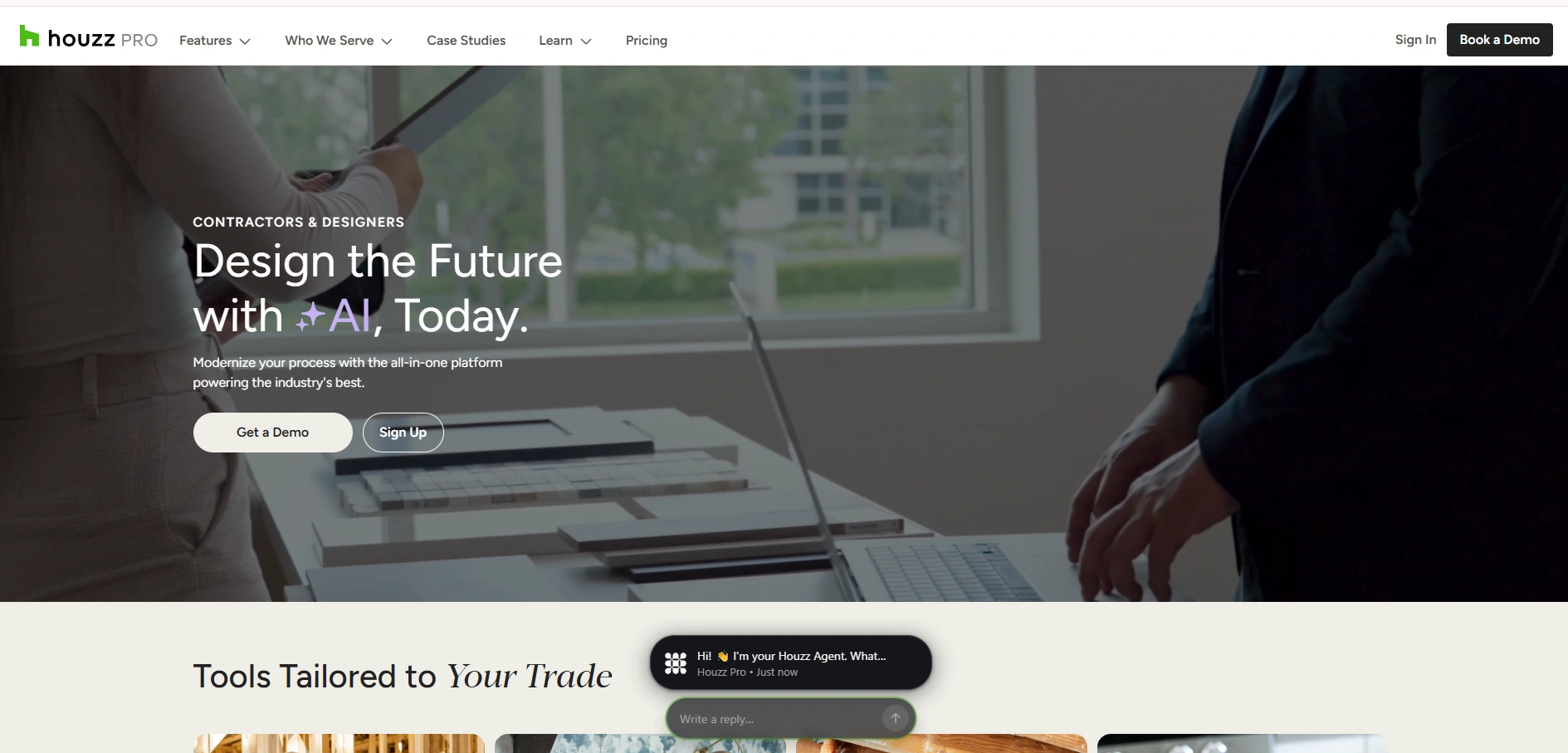
Website: https://www.houzz.com/pro
Pricing: Starter ~$65/month, Essential ~$99/month, Pro ~$149/month, Ultimate ~$499/month (per-user pricing, 30-day free trial)
Houzz Pro is a different kind of channel than the rest of this list – it’s not a direct-to-consumer storefront but a business and project-management platform for design and construction professionals, with a built-in product catalog and “Clip Tool” that lets designers source and spec products (including furniture) directly into client proposals. The pitch for furniture brands isn’t volume retail – it’s getting specified into projects by the 3M+ active design and construction professionals and 70M+ homeowners researching projects across Houzz’s network.
| Pros | Cons |
| Reaches design/trade professionals who spec products at scale | Not a direct consumer storefront – it’s a B2B lead-gen and project tool |
| 3D floor-planning tools let designers visualize your product in real projects | Per-user subscription pricing scales quickly for teams |
| Large built-in network (3M+ pros, 70M+ homeowners) | Primarily useful if your buyer is a designer/contractor, not an end consumer |
| Strong fit for trade/B2B furniture sales | Steeper learning curve and reported slower customer support |
How to win on Houzz Pro: Designers use Houzz’s Clip Tool and 3D floor planner specifically to show clients how a piece will look in their actual room before buying – furniture brands that supply designers with 3D-ready, room-placeable assets (rather than flat catalog photos) make it dramatically easier to get specified into a real project, which is the entire point of this channel.
13. Faire
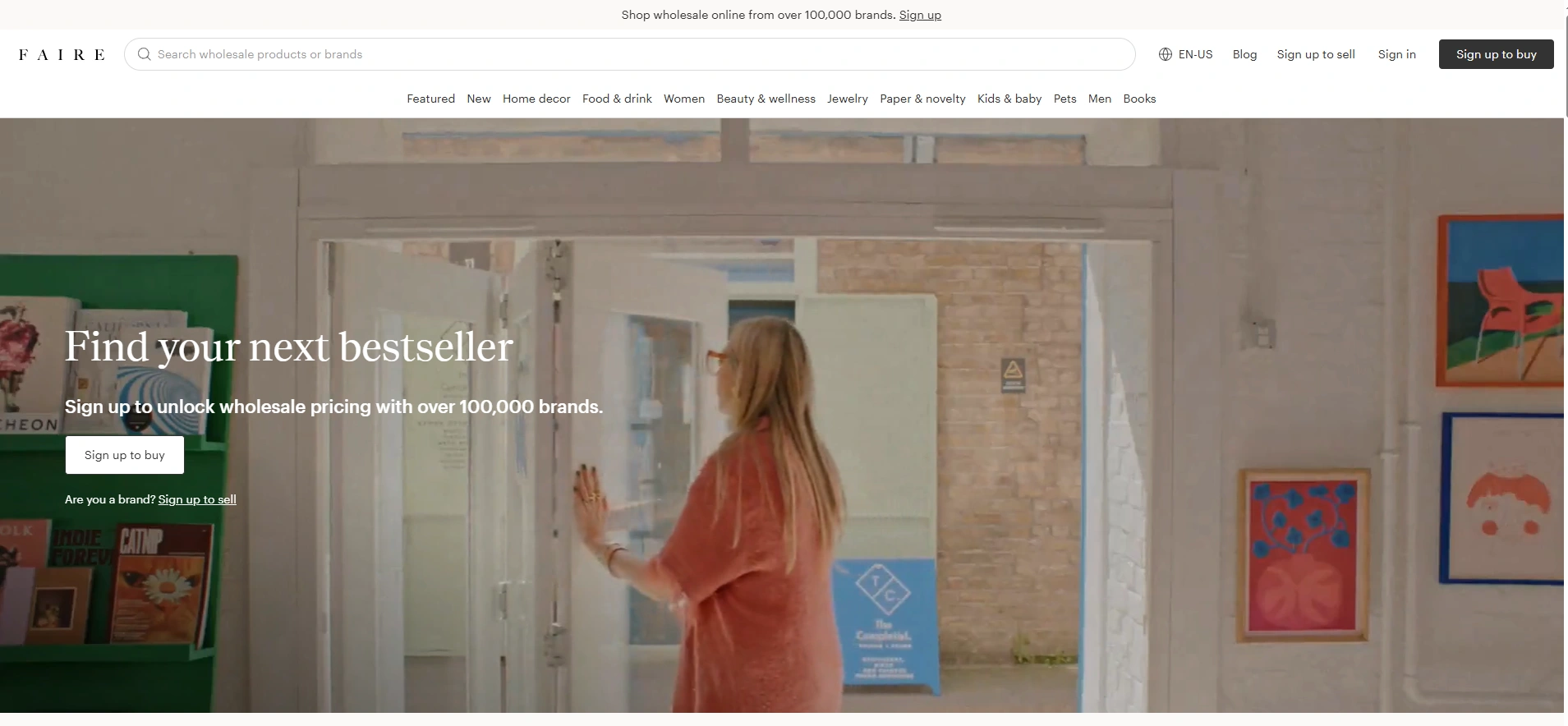
Website: https://www.faire.com/
Pricing: 15% on reorders; 25% on opening orders from new customers discovered through the marketplace. 0% commission on customers you invite through Faire Direct.
Faire is the wholesale B2B counterpart to the consumer marketplaces on this list – it connects furniture brands directly with independent boutique and retail buyers rather than end consumers, with over 700,000–900,000 retailers browsing the platform. Retailers get 60-day payment terms and free returns on opening orders, which Faire funds in exchange for its commission. Brands set wholesale pricing (typically around 50% of intended retail price) and apply for approval, which usually takes a few days to a couple of weeks.
| Pros | Cons |
| Free to join – no subscription or listing fees | 15% commission plus a $10 new-customer fee on first orders |
| Access to 700K–900K+ vetted retail buyers | Approval not guaranteed – Faire reviews category supply/demand |
| 0% commission on self-sourced retailers via Faire Direct | Best suited to brands with manufacturing capacity for wholesale volume |
| Faire handles payment guarantees and return logistics | Requires wholesale-ready pricing (~50% of retail) |
How to win on Faire: Retail buyers on Faire are making fast purchasing decisions across dozens of competing brands in a single scroll session – wholesale catalogs that include lifestyle and 3D-rendered imagery (not just flat product-on-white shots) help a furniture line stand out in a marketplace built around rapid visual browsing, and reduce the back-and-forth questions that slow down a buyer’s decision to place that first order.
14. TikTok Shop

Website: Managed through the TikTok app / TikTok Shop Seller Center
Pricing: 0/month to list. Referral fee is a flat 8% per transaction for the Home and Furniture categories .
TikTok Shop is the fastest-growing channel on this list and the one most absent from competitor coverage of “where to sell furniture online.” It reaches roughly 170 million+ US TikTok users and is projected to do $23.4 billion in US GMV in 2026. Unlike the search-driven marketplaces above, TikTok Shop is discovery-first – sales are driven by short-form video content and creator partnerships rather than buyer search intent, which makes it a fundamentally different sales motion for furniture brands to learn.
| Pros | Cons |
| No subscription fees; lowest flat referral rate (6%) on this list | Content-driven – limited organic visibility without video/ads |
| Massive, highly engaged audience skewing younger | Furniture’s high price point and consideration cycle is a harder fit for impulse-driven video commerce |
| Creator/affiliate program extends reach without upfront ad spend | Affiliate commissions (10–30%) stack on top of the referral fee |
| Fulfilled by TikTok (FBT) offers Amazon-FBA-style logistics | Independent shipping options have been in flux through 2026 |
How to win on TikTok Shop: Furniture is a hard sell in a 15-second video unless the visual does the convincing instantly – short clips built from 3D-rendered product spins, room transformations, or “place this in your space” AR-style demos consistently outperform static product photography in this format, because they show scale and styling in motion, which is exactly what static images can’t do.
15. Meta Commerce (Instagram & Facebook Shop)

Website: https://www.facebook.com/business/tools/commerce-manager
Pricing: Free to set up a shop and catalog. US shops must use native Meta checkout; linking out to an external website for checkout is no longer supported for standard Meta Shops
Meta Commerce isn’t a single marketplace but a shop layer across Instagram and Facebook, tapping into a user base measured in the billions globally – though actual furniture-shopping reach depends entirely on targeting, organic content, and ad spend rather than marketplace-style browsing. It’s most effective as a complement to an owned storefront (Shopify, for example) rather than a standalone sales channel, since Meta’s checkout and catalog tools are built to funnel traffic, not replace a full e-commerce backend.
| Pros | Cons |
| Free to set up; no subscription cost | Reach depends almost entirely on content quality and ad spend |
| Massive potential audience across Instagram + Facebook | Not built as a standalone storefront – works best paired with Shopify or similar |
| Strong fit for visually-driven categories like furniture and decor | Organic reach has declined significantly without paid boosting |
| Shoppable posts/reels integrate directly with existing social strategy | Catalog setup and policy compliance can be fiddly for physical goods |
How to win on Meta Commerce: Furniture is one of the most visually-driven categories on Instagram specifically, and shoppable posts built around styled, 3D-rendered room scenes (rather than plain product catalog images) consistently get better engagement and saves than flat product shots, which directly improves the organic reach Meta’s algorithm still rewards.
Choosing the Right Furniture Marketplace for Your Brand
There is no single “best” platform for selling furniture online. The right choice depends on your business model, profit margins, target audience, and whether you want to build your own storefront or leverage an established marketplace.
Choosing the wrong channel can be costly. High fees can erode profits, while poor product presentation can lead to lower conversions, higher return rates, and lost revenue-regardless of the platform you choose.
At Orbe3D, we help furniture brands maximize performance across Amazon, Wayfair, Shopify, and other leading sales channels with high-quality 3D renders, lifestyle imagery, and AR-ready content designed to improve buyer confidence and showcase products more effectively. Whether you’re launching on a marketplace or scaling your own eCommerce store, the right visual content can make every sales channel work harder.
Not sure if 3D rendering is right for your brand? Start with a free test render and see how professional product visuals can improve presentation, engagement, and conversions.
FAQ:
Q: Where can I sell furniture online for free?
Facebook Marketplace, Craigslist, and OfferUp allow you to list furniture with little or no upfront cost.
Q: What’s the cheapest platform to sell furniture online?
Shopify is often the most cost-effective option for brands because you avoid marketplace commissions and control your own store.
Q: Do I need a business license to sell furniture online?
Requirements vary by country and state. Occasional sellers may not need one, but businesses typically do.
Q: Which platform is best for handmade or made-to-order furniture?
Etsy is one of the best platforms for handmade, custom, and made-to-order furniture.
Q: Can I sell furniture internationally on these platforms?
Yes. Platforms like Shopify, Amazon, and Etsy support international sales and shipping.
Q: How do I reduce return rates when selling furniture online?
Use high-quality product images, accurate dimensions, detailed descriptions, and realistic 3D visualizations to set clear customer expectations.